Stinging Insects in Utah: Wasps, Hornets & Yellowjackets — What to Do (and What Not to Do)
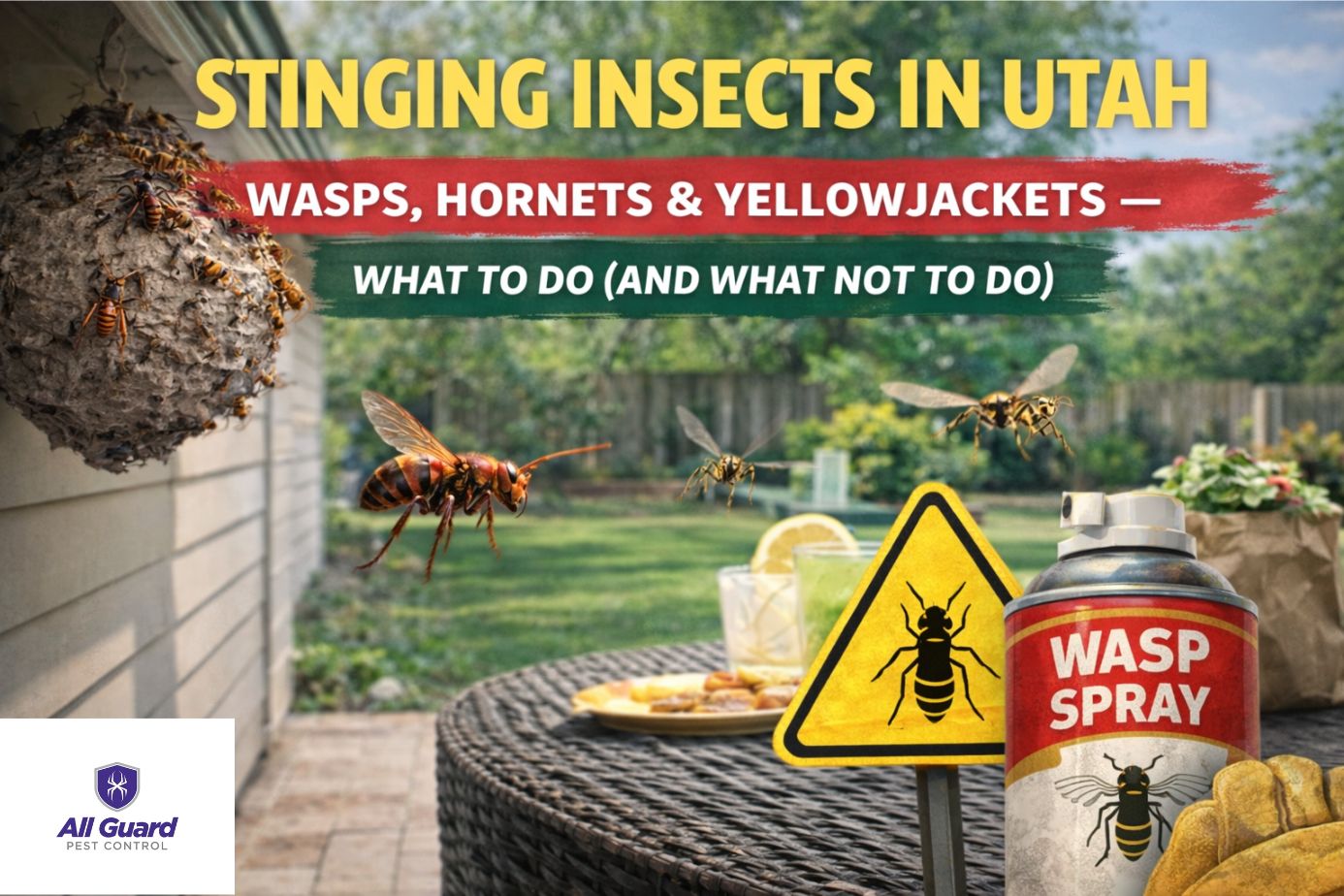
Stinging Insects in Utah: Wasps, Hornets & Yellowjackets — What to Do (and What Not to Do)
Warm afternoons in Orem, Provo, Lehi, Sandy, and Mapleton bring out more than hikers and patio dinners—they wake up stinging insects. Paper wasps start tiny umbrella nests on eaves, yellowjackets move into ground voids and wall cavities, and “hornet” look-alikes defend anything that smells like food around trash and grills. If you’re seeing steady traffic at the door or a steady stream under the soffit, timing and placement matter.
The fix isn’t waving a can in the air; it’s professionally applied nest treatment, removal, and a few small home tweaks that keep them from starting over.
Questions or want a quick, local plan? Call (801) 851-1812 or reach us on the contact page. No long-term contracts. No door-to-door reps—our pricing stays competitive and scheduling is fast.
Quick ID for Utah Homes (so you choose the right move)
Paper wasps build open, umbrella-shaped paper nests with exposed combs under eaves, porch ceilings, pergolas, and playsets. You usually see a few wasps coming and going.
Yellowjackets are stockier, faster, and more aggressive near trash, grills, and outdoor eating. Their nests are enclosed paper balls in voids (behind siding, in shed walls, meter boxes) or in the ground.
Bald-faced “hornets” (actually a type of yellowjacket) build large, gray, football-shaped paper nests in trees or on structures and defend them vigorously.
If you’re not sure, that’s fine—our tech will ID it on site and pick the safest, most effective removal route through Wasp Control.
Why activity surges (and why fall feels worse)
Spring: Overwintered queens look for quiet, protected spots and start quarter-sized nests. Easy to stop early.
Summer: Colony size grows quickly; you’ll notice more flight paths under eaves and around play equipment.
Late summer/fall: Natural food sources drop, so yellowjackets hit trash cans, picnic tables, and BBQ grease trays. Defensive behavior spikes right when you’re outside more.
That’s why “wait and see” turns into “can’t use the patio.” Treat early, remove the nest, and reduce the food draw before colonies peak.
DIY risks (and when to step back)
Spraying a visible nest mid-day, plugging mystery holes in siding, or stomping ground entrances are three fast ways to provoke a swarm.
- Daytime traffic means workers are away. You won’t reach the core, and survivors can rebuild nearby.
- Do not seal a void with active traffic. Trapping a hot colony in a wall can force them into living spaces.
- Ground nests are different. Yellowjackets can come up fast and in numbers.
If the nest is larger than a baseball, higher than step-ladder height, in a void, or in the ground, skip DIY and book Wasp Control.
The All Guard approach (built for Utah homes)
This service focuses on precision and prevention—not blanket coating.
Identify & map
We confirm species, locate the nest (eave, tree, ground, or structural void), and map flight paths plus nearby “drivers” like bins, BBQs, and lighting.
Professionally applied direct nest treatment
We use labeled materials at the nest, chosen for the location (open eave, concealed void, ground). The goal is complete knockdown at the source—not chasing flyers.
Removal & disposal
Once inactive, we remove the paper nest where it’s safe to do so. Removing the structure helps reduce the cues that trigger rebuilds in the same spot.
Preventive eave work & void sealing (after activity ends)
We apply targeted placements to common start points (soffit seams, bracket joints) and, once the nest is inactive, seal accessible void entries (meter gaps, siding seams, attic vents) so a new colony doesn’t squat next week.
A short punch list for you
Tighten trash lids, relocate bins away from doors, clean grill grease trays, and adjust lighting near entries. These quick wins reduce restarts dramatically.
Special situations we see a lot
Ground yellowjackets near patios: We treat the underground nest and mark the zone while it resolves—no mowing or foot traffic until cleared.
Wall-void nests behind siding: We treat through small access points, confirm inactivity, then seal. Don’t caulk first.
Tree-hung “hornet” nests: We treat from a safe distance, schedule removal, and advise canopy trims so limbs don’t overhang high-traffic areas.
Playset and pergola starts: Spring treatments plus hardware-joint attention stop these from scaling when kids are outside daily.
If activity expands after service (rare but possible as stragglers return), we re-check and re-treat any secondary areas. Follow-through is the difference between “gone today” and “gone for good.”
What you can do in the first 15 minutes
- Move trash/recycling away from doors and keep lids tight.
- Wipe BBQ grease trays and cover sweet drinks outdoors.
- Keep kids and pets inside until we confirm the area is inactive.
- If you see steady traffic into a crack or hole, don’t seal it—call so we can treat/remove first.
You’ll usually notice a sharp drop in activity within minutes to hours after a direct nest treatment, with full quiet after removal and cleanup.
Pairing nest work with overall pest control
Stinging insects follow opportunity. When night lighting pulls moths to the door, you also get spider webs on the soffit and ants scavenging under lights. We often pair Wasp Control with Spider Control at eaves and a quick Ant Control check along slab seams. A few lighting and sanitation tweaks plus precise exterior placements give you a calmer patio all season.
City notes from the route
- Orem: bright garage fixtures and rock borders make eave starts and ground nests common—bin relocation and eave attention go a long way. Start here: Orem Pest Control
- Provo: canyon breezes push flight paths along porch ceilings; we focus on soffit seams and void entries. Start here: Provo Pest Control
- Lehi: new-build gaps at meter lines and under siding are classic concealment zones—void treatment plus sealing stops repeats. Start here: Lehi Pest Control
- Sandy: late-season food scarcity drives yellowjackets to decks and bins; timing a preventive pass in August/September helps avoid fall aggression. Start here: Sandy Pest Control
- Mapleton: irrigation keeps ground nests comfortable; dawn watering and dry soil edges reduce the draw. Start here: Mapleton Pest Control
FAQs (Utah Edition)
Will they reuse the same nest next year?
Paper nests aren’t reused, but the site can be—especially if the old nest remains. That’s why we remove paper and treat common start seams.
How fast does a treated nest quiet down?
Open eave nests calm within minutes to hours; concealed or ground nests may need a short observation window before removal.
Can you treat inside my wall without tearing it open?
In most cases, yes—we access the void through small points, verify inactivity, then seal the entry so a new queen can’t restart.
Are products “safe” for kids and pets?
We avoid the word “safe.” Materials are professionally applied, selected for your environment, and placed where they’re effective. We’ll outline any short re-entry intervals and keep you clear until the area is quiet.
What a stinging-insect visit includes (with All Guard)
- On-site ID and mapping of nest location(s) and flight paths
- Direct nest treatment matched to eave, ground, tree, or structural void conditions
- Nest removal and debris cleanup when it’s inactive and safe to take down
- Targeted preventive eave work at common start seams
- Void sealing after activity ends (vents, meter gaps, siding seams)
- A simple punch list (bins, grill, lighting) that prevents restarts
- Clear expectations: what to avoid until dry, what you might see for a few hours, and when to call if traffic persists
No long-term contracts. No door-to-door reps. Just local techs on local routes who explain exactly what we did and why—plain English.
Don’t ignore other structural pests
Seeing mud tubes, soft trim, or blistered paint while you’re checking eaves? That’s a termite warning—different tools, different plan. Start with Termite Control.
Travel recently and now noticing live bugs, shed skins, or black spotting on seams? Skip DIY and go straight to Bed Bug Treatment with follow-up.
Bottom line (and when to call)
If you’re seeing steady traffic to a single point, there’s a nest—and it grows fast. Treat it at the source, remove it, and close off the entry. Pair that with a couple of simple yard habits and you get your porch, deck, and bins back.
Want the easy route? We’ll walk the perimeter with you, show the exact culprits, and put a plan in place—contract-free and tuned to Utah.
Call (801) 851-1812 or request service for fast Wasp Control anywhere in Orem, Provo, Lehi, Sandy, or Mapleton.