Cockroach Control: Signs, Causes, and Effective Solutions (Utah Edition)
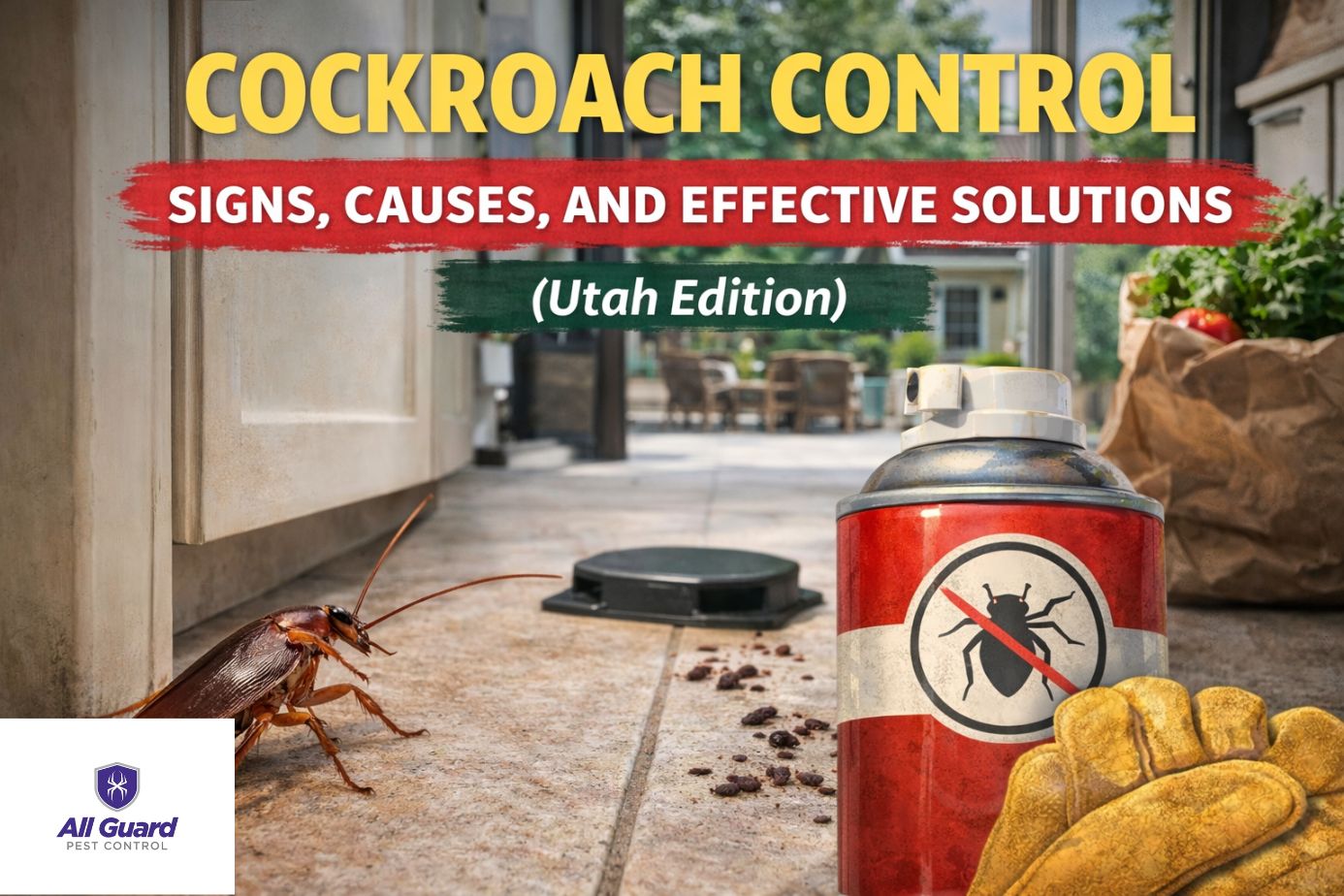
If you’ve spotted a fast, brown blur when the kitchen light flips on—or found “pepper-like” specks behind the stove—you’re not alone. Orem, Provo, Lehi, Sandy, and Mapleton all see roaches where warmth, moisture, and food intersect. The mistake most people make is fogging or spraying open surfaces. It feels powerful, but it contaminates bait zones and drives roaches deeper into wall voids.
Real control in Utah comes from a different approach: gel-bait rotation, IGR (growth regulator), precision crack-and-crevice placements, sanitation corrections, sealing entry points, and timed follow-ups.
Questions or want fast help? Call (801) 851-1812 or message us on the contact page. No long-term contracts. No door-to-door reps—pricing stays competitive and scheduling is quick.
How to Tell If You Have Roaches (Utah signs)
- Night sightings: Flip a light after dark and you see scurries along toe-kicks, under appliances, or around the dishwasher.
- Droppings: Small, black “pepper” specks near hinges, outlets, cabinet corners, and behind the range.
- Egg cases (ootheca): Tan/brown capsules in warm, hidden cracks.
- Odor: A faint, oily/musty smell in heavy activity zones.
- Smear marks: Dark lines where roaches run along edges.
If you’re seeing these, skip broadcast sprays. Go straight to a bait-first, crack-and-crevice plan—or book Cockroach Control so we can map routes and place materials where roaches actually live.
Why Utah Homes Get Roaches (Causes you can fix)
Moisture + warmth: Sink bases, refrigerator compressors, dishwashers, water heater closets, and laundry rooms.
Food rewards: Pet bowls left out overnight, open bird seed, syrup jars, crumb trails, and trash that sits inside.
Harborage: Stacked cardboard, cluttered pantries, and tight gaps behind appliances.
Multi-unit transfer: In townhomes or apartments, roaches ride shared walls, plumbing chases, and utility penetrations.
Seasonal shifts: Hot summers push activity to cool interiors; winter drives insects to stable heat sources.
None of this means your house is “dirty.” It means roaches found a reliable intersection of heat, water, and food—and they’re built to exploit it.
Why Foggers and Over-the-Counter Sprays Fail
- They contaminate bait sites. Roaches avoid treated surfaces, so they won’t feed on gel—you’ve just disabled the most powerful tool.
- They don’t reach the voids. Colonies sit in cracks, hinges, gaskets, motor housings, and wall gaps—not the middle of the floor.
- They cause scatter. You see fewer for a day, then more in new rooms.
- They create a false “reset.” You knock down visible roaches but leave the breeding cycle untouched.
The fix is targeted: in the crack, not on the counter.
The All Guard Plan (What actually works here)
All Guard’s Cockroach Control is built for Utah construction and climate. It’s staged, precise, and designed to collapse the population—not just chase sightings.
1) Inspection & mapping
We locate harborage, moisture points, and routes: toe-kicks, hinge cavities, appliance motors, wall voids at plumbing/electrical penetrations, and shared chases in multi-unit buildings.
2) Gel-bait rotation (food match matters)
We place small bait dots in hidden seams (hinges, corners, behind gaskets) and rotate formulations to prevent bait fatigue. Roaches feed, return, and transfer the active within the population.
3) IGR (Insect Growth Regulator)
An IGR breaks the lifecycle so nymphs don’t become breeding adults. This is what turns a “knockdown” into a real collapse.
4) Crack-and-crevice non-repellents
We apply labeled non-repellents into voids—outlets, pipe penetrations, toe-kick gaps, cabinet seams—where roaches actually travel and where applications can last. Not open surfaces. Not counters.
5) HEPA vacuum & mechanical removals (as needed)
For heavy activity, physical removal knocks numbers down fast and helps remove allergens and egg material from tight zones.
6) Sanitation & sealing
You’ll get a short, doable punch list: fix drips, store pet/bird food in rigid containers, reduce cardboard, and seal obvious gaps at utility penetrations.
7) Follow-up & adjust
A second visit is where good jobs become great: we read the rebound, swap bait flavors if needed, and extend placements to any new routes. That’s how you stop the “it moved to another room” cycle.
Need this in a kitchen that can’t be down for long? We can stage work by zone and schedule for minimal disruption.
Your First 48 Hours (Do this, skip that)
Do:
- Wipe crumbs and sticky spots (especially around the stove and trash area).
- Empty and line trash.
- Run the dishwasher nightly.
- Store pet/bird food in rigid containers.
- Dry sink rims before bed.
Don’t:
- Bleach or spray over hinges, toe-kicks, or corners where bait went—give baits time to work (we’ll tell you where).
- Fog or broadcast spray; you’ll shut down bait feeding and stall the program.
You’ll typically see more activity the first 2–3 nights (that means feeding is happening), then a sharp drop as transfer kicks in.
Single-Family vs. Multi-Unit: What Changes
Single-family homes: We focus on kitchens, laundry, baths, and penetrations—then tighten sanitation and sealing.
Multi-unit buildings: We plan around shared chases and common voids. One clean unit surrounded by active neighbors will keep getting reinvaded—coordination is key.
Serving Orem, Provo, Lehi, Sandy, and Mapleton, we tailor plans to building type and neighborhood pressure.
Small Habits That Supercharge Results
✅ Move pet bowls up overnight; rinse and dry.
✅ Keep counters dry; wipe syrup/sugar rims; vacuum crumbs at toe-kicks.
✅ Swap cardboard for bins (roaches love corrugation).
✅ Fix drips; insulate sweating pipes; use a bathroom fan 20 minutes after showers.
✅ Pull the range and fridge (we’ll guide spacing) so bait and cleaning actually reach the back edges.
Just a couple of these can cut the number of follow-ups you’ll need.
How Long Until They’re Gone?
- Days 1–3: You may see more activity as feeding spikes.
- Days 4–10: Nymphs and adults crash; sightings drop.
- 2–3 weeks: Follow-up adjusts bait flavor/placement, extends into new routes, and reinspects moisture/harborage fixes.
Heavy, long-standing infestations or multi-unit buildings may need an extra check—still contract-free and scheduled fast.
When It Isn’t “Just Roaches”
- Termites: Mud tubes, soft trim, or blistered paint is structural. Different tools, different plan. Start with Termite Control.
- Bed bugs: Travel-tied, not sanitation. Look for live bugs, shed skins, and black spotting on seams. Skip DIY; go straight to Bed Bug Treatment.
- Ants & spiders: Summer pressure along slab seams and weeps? Pair roach work with Ant Control and Spider Control so you’re not trading one issue for another.
Utah City Notes from the Route
- Orem: older kitchens + rock borders mean toe-kick routes and slab seams; bait at hinges and non-repellent in voids win here. Start here: Orem Pest Control
- Provo: mixed-age rentals and shared walls require chase-level treatment and landlord coordination. Start here: Provo Pest Control
- Lehi: new builds still get roaches via garage entries and boxes; sanitation + sealing utilities pays off fast. Start here: Lehi Pest Control
- Sandy: seasonal pressure can spike; kitchen void work plus exterior prevention reduces rebounds. Start here: Sandy Pest Control
- Mapleton: irrigated edges keep moisture higher; downspout extensions and dawn irrigation help keep the line drier. Start here: Mapleton Pest Control
FAQs (Utah Edition)
Can I spray baseboards after you bait?
Hold off. Sprays contaminate bait zones and reduce feeding. We’ll tell you exactly where to avoid cleaning and for how long.
Are your products “safe” for kids and pets?
We avoid the word “safe.” Materials are professionally applied, selected for your environment, and placed where they’re effective. We’ll outline any short re-entry intervals and what to keep off-limits until dry.
How many visits will I need?
Most homes: initial + 1 follow-up. Heavy or multi-unit: sometimes a third light visit to polish off stragglers.
Do you treat inside only?
Roaches are an interior-first pest, but we still address garage/utility areas if they’re acting as sources and tighten exterior entry points where it matters.
What a Cockroach Control Visit Includes (with All Guard)
- Detailed inspection and route map (appliances, hinges, voids, utilities)
- Gel-bait rotation matched to local food preference
- IGR to break the lifecycle
- Crack-and-crevice non-repellents in voids (not on open surfaces)
- Targeted HEPA vacuum where counts are heavy
- A simple sanitation & sealing punch list you can finish in under an hour
- Follow-up to adjust placements and lock in results
No long-term contracts. No door-to-door reps. Just local techs on local routes who explain what we did and why—plain English.
Ready to Clear Your Kitchen?
Don’t chase roaches around the room. Put the right material in the right crack, let transfer work, and fix the few moisture/food rewards that keep them coming back. We’ll handle the placements and the plan; you get your kitchen back.
Call (801) 851-1812 or request service for contract-free roach control anywhere in Orem, Provo, Lehi, Sandy, or Mapleton.