Pest Entry Points Most Homeowners Overlook (Utah Edition)
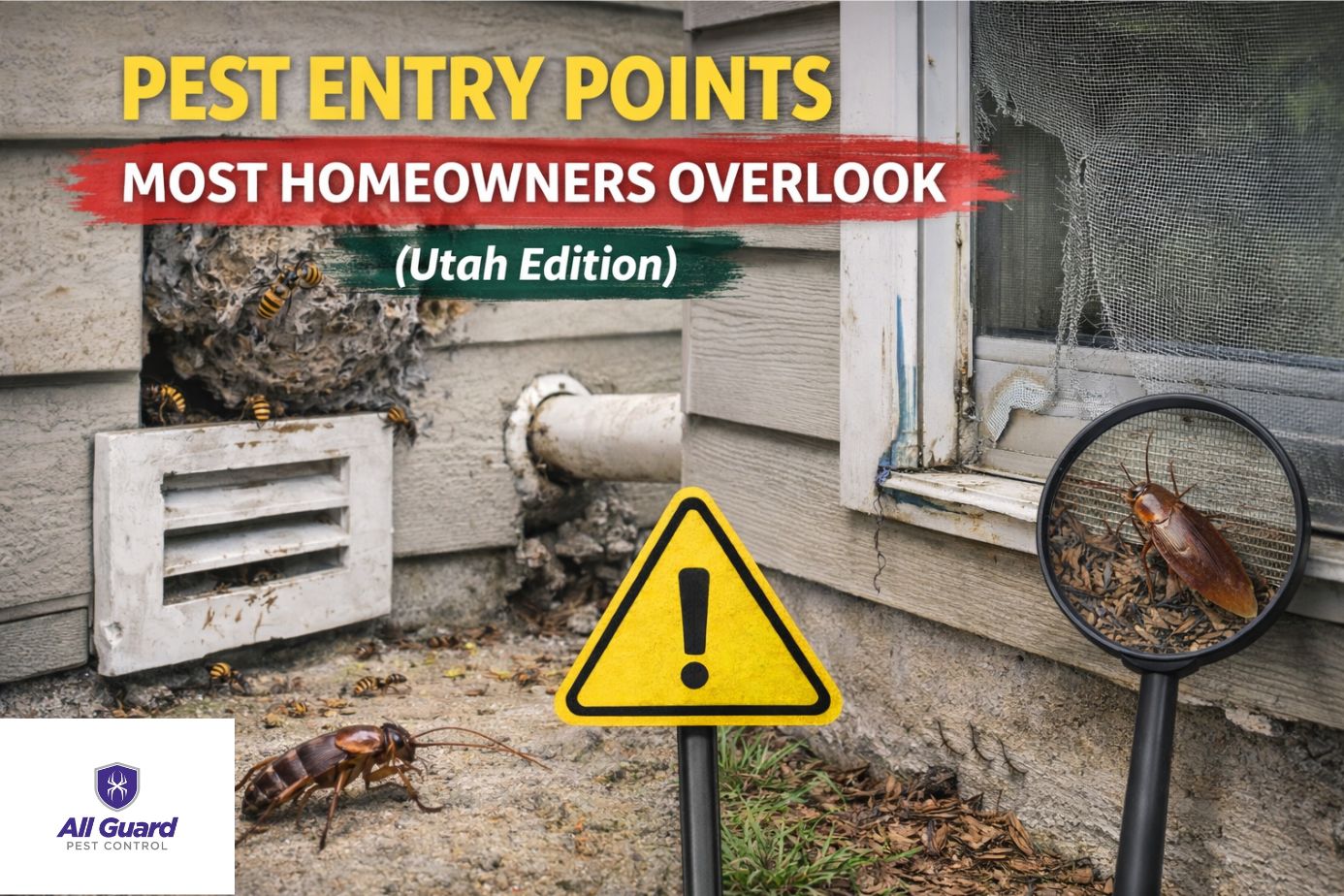
If you keep wiping ant trails or knocking down webs and they come right back, the problem usually isn’t “mystery bugs.” It’s small, predictable seams around the structure—door sweeps that show daylight, utility penetrations packed with air instead of copper mesh, weep features that double as highways, and slab joints that line up perfectly with rock beds.
Tighten those seams and every professionally applied treatment goes further. Ignore them and you’ll be chasing symptoms all season.
This guide shows where pests actually get in around Utah County homes and what to do about it—plus when it’s time to bring in a local pro for targeted work that holds.
Questions or want a quick quote? Call (801) 851-1812 or reach us on the contact page. No long-term contracts. No door-to-door reps—pricing stays competitive and scheduling is fast.
Why entry points matter more in Utah
Utah conditions turn tiny gaps into busy on-ramps:
- Hot, dry days push insects to the cool, shaded edge along foundations
- Morning irrigation and A/C condensate create reliable moisture inches from thresholds
- Fall temperature drops shrink door seals and push mice toward garage corners
That combination hits hard in Orem, Provo, and Lehi where landscaping runs tight to stucco and concrete, and foundations stay shaded by rock beds.
The most overlooked entry points (and how to fix each)
1) Door sweeps, weatherstrip, and garage bottom seals
If you can see light under a closed door, pests can see your kitchen. Ants, spiders, and winter mice all use this highway.
Fix: Replace worn sweeps and compress weatherstrip until no daylight shows. Pay special attention to garage corners where seals curl.
If rodents are part of the pressure, pair sealing with a plan like Mice and Rodent Control so you’re not resetting traps every week.
2) Utility penetrations (gas, cable/comm, hose bibs, electrical conduit)
These are almost always under-sealed and sit exactly where irrigation keeps soil damp.
Fix: Pack voids with copper mesh + foam (mesh first so it can’t be chewed out). We reinforce these routes during exterior work so placements sit where insects actually cross.
3) Weep systems and stucco/trim gaps
Weeps must breathe—but they’re also crawlways when landscaping touches the wall.
Fix: Pull rock or mulch 6–12 inches off stucco so a clean treatment band can reach these seams. If webs rebuild at eaves and door frames, reinforce with targeted exterior work through Spider Control.
4) Foundation slab joints and expansion cuts
That straight crack where driveway or patio slabs meet the foundation is a mapped highway for ants and earwigs.
Fix: Keep the joint visible and debris-free. Don’t let groundcover or decorative rock bridge over it. We use non-repellents along these lines as part of Ant Control so workers carry the active back to the colony.
5) Window wells and basement egress frames
Cool, protected pockets that attract prey species—and then spiders follow.
Fix: Clear debris, re-seat well covers, and seal frame edges. If widows or heavy webbing are present, ask us to combine web removal with targeted crack-and-crevice placements via Spider Control.
6) Dryer, bathroom, and attic/gable vents
Torn screens and loose louvers become revolving doors for insects—and in winter, mice.
Fix: Cover with ¼-inch hardware cloth (not thin window screen) and re-caulk loose housings. Dry cavities can be protected with the right type of application without over-broadcasting into living spaces.
If winter mouse activity is already happening, start with Mice and Rodent Control.
7) Deck ledgers, stair stringers, and under-deck voids
Undersides trap shade; paper wasps and spiders love the quiet structure.
Fix: Seal obvious ledger gaps, keep storage off the wall, and schedule a spring inspection for starters. Active nests? Direct treatment/removal through Wasp Control prevents July blow-ups.
8) Retaining walls, fence lines, and mailbox posts
Joint gaps and warm stone create perfect ant and earwig runways that lead straight to the slab edge.
Fix: Maintain a gap between rock borders and siding. We place a perimeter band across the travel line and at the wall-to-house intersection.
9) Sill plates and garage wall lines
Dusty rub marks along base plates are rodent highways; ants and roaches also use these protected edges.
Fix: Declutter wall lines so devices can be placed flush, seal any visible break in the sill gasket, and pair with locking exterior stations if winter pressure is high.
For recurring winter issues, start with Mice and Rodent Control.
10) Exterior hose boxes, irrigation manifolds, and valve boxes
Damp lids + shaded corners = earwigs, spiders, and ant staging zones.
Fix: Dry boxes periodically, adjust irrigation for dawn cycles, and reinforce the perimeter in those micro-zones.
A 30-minute DIY audit that finds 80% of problems
Walk the exterior mid-day with a flashlight and a roll of blue painter’s tape.
- Tape any gap where light shows under doors, around frames, or at utility lines
- Pull rock/mulch back 6–12 inches anywhere it touches siding or stucco
- Check vent screens and well covers; note torn mesh or loose housings
- Mark slab joints that have bridged over with soil or decorative rock
- Inside the garage, clear 6–8 inches along wall lines so edges are visible and serviceable
When you’re done, call (801) 851-1812 and we’ll walk those tape marks with you, place materials where pests actually travel, and give you a short to-do list that keeps results locked in.
Utah timing: when to seal vs. when to treat
Early spring: Seal utility penetrations and replace door sweeps before ant scouts get rewarded. Pair with a light exterior perimeter and wasp-starter checks through Wasp Control.
Mid-summer: UV at elevation and irrigation degrade exposed residues; maintain overlap with quarterly or every-other-month service so you don’t hit a gap week when populations peak.
Fall: Spiders and boxelder bugs stack on sun-facing walls; rodents follow shrinking seals. Exterior barrier + exclusion now = quiet winter.
Winter: Exclusion plus targeted edge work if you’re hearing activity. More in Mice and Rodent Control.
When a pro is the right call (don’t DIY these)
- Active or hidden wasp/yellowjacket nests in eaves, voids, or the ground—treat/remove directly, then harden start points with Wasp Control.
- Ant trails that rebuild after store sprays—repellents fracture colonies and hide the problem. Use non-repellents and matched baits through Ant Control.
- Webs and egg sacs that reappear weekly—requires targeted exterior crack-and-crevice placements and web removal via Spider Control.
- Recurring rodents—sealing plus devices and follow-ups beat “trap-and-pray.” Start with Mice and Rodent Control.
Special cases homeowners mix up: termites and bed bugs
Not every “bug at the baseboard” is the same problem.
Termites: Mud tubes on foundations, soft or blistered trim, and paint that bubbles without water leaks are structural red flags. Don’t scrape and forget—schedule Termite Control for a non-repellent perimeter or bait system.
Bed bugs: Tied to travel, not seasons. Live bugs, shed skins, and black spotting on seams mean you need Bed Bug Treatment with follow-up; DIY typically spreads them to new rooms.
City notes from the route (so you can prioritize)
Homes across Orem often have rock borders tight to stucco and bright porch lighting—pull materials back and warm the bulbs to cut spider rebuilds. In Provo, mixed-age construction means older door sweeps and weep features need attention before spring surge. Lehi new builds show lots of slab seams and utility penetrations in open exposures—non-repellent bands at those seams prevent July ant break-ins.
Start with your city page if you want service in your area:
What your visit includes (with All Guard)
- A fast perimeter walk to show you the exact seams at your home
- Professionally applied placements at real entry points: eaves/soffits, door and window frames, weep systems, utility penetrations, slab joints, and retaining-wall seams
- Web and egg-sac removal on reachable structures
- Direct nest treatment/removal for stinging insects when present
- A simple, prioritized punch list (door sweeps, copper mesh + foam, rock/mulch spacing, irrigation timing)
- Clear expectations for the first 3–7 days and quick follow-up if pressure rebounds
No long-term contracts. We don’t use door-to-door reps, which keeps pricing competitive and scheduling fast.
The bottom line
Pest control gets easy when the structure stops inviting them in. Seal the seams that matter, keep a gap around the foundation, and place materials exactly where insects and rodents travel. Do that, and you won’t be chasing trails and webs every week.
Want us to point out your top three entry points in ten minutes and start a plan that holds? Call (801) 851-1812 or request service on our contact page. We service Orem, Provo, Lehi, Sandy, and Mapleton with local routes and contract-free options that fit your home.