8 Signs You Need Pest Control Right Now (and What to Do First)
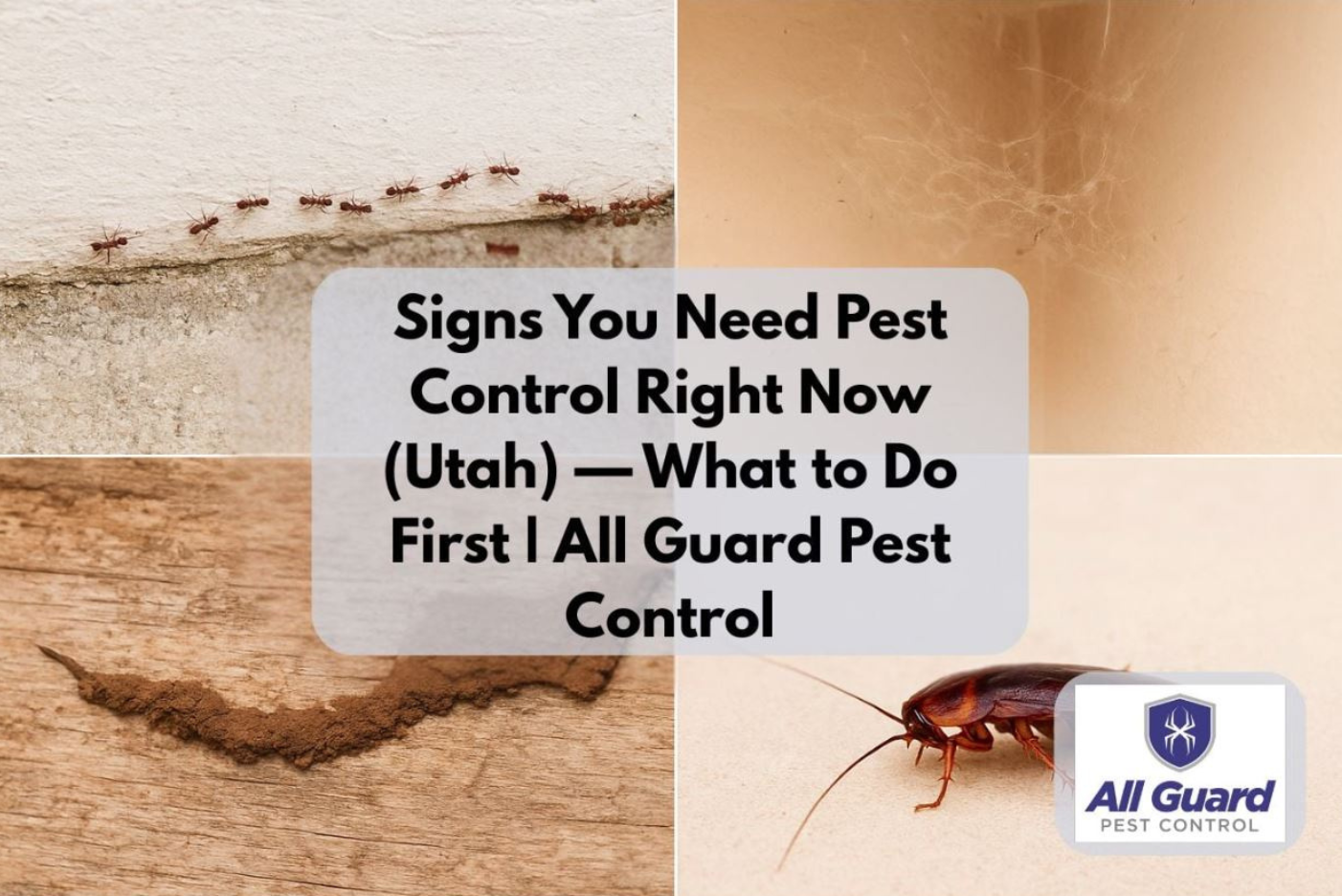
If you live in Orem, Provo, Lehi, Sandy, or Mapleton, pest problems rarely appear “out of nowhere.” A steady line of ants after irrigation, webs that rebuild overnight on the eaves, yellowjackets orbiting the trash can, or scratching at 2 a.m.—each is a map pointing to the exact seam pests are using. This guide shows the Utah-specific red flags, the first move that actually helps, and when it’s time to bring in professionally applied service so the issue doesn’t rebound next week.
Questions or want a quick quote? Call 801-851-1812 or reach us on the contact page. We don’t do long-term contracts, and with no door-to-door reps our pricing stays competitive.
Red Flag #1: A Steady Ant Trail (especially after rain or irrigation)
What it means (Utah reality): A scout found moisture or food; the colony laid a pheromone highway. Repellent sprays make trails “vanish,” then the colony fractures and resurges in new spots—common along slab seams and rock-against-stucco borders.
Do this first: Wipe trails with soapy water to cut pheromones. Don’t blast repellents across counters; you’ll scatter the colony.
Next step that works: Use matched baits (sweet vs. protein) and non-repellent placements so workers carry actives into the nest. Outdoors, target slab joints, weep holes, and utility penetrations. If trails rebuild within 24–48 hours, start our colony-level plan via Ant Control.
Red Flag #2: Webs Rebuild on Eaves Within 24–48 Hours
What it means: Your lights are serving a moth buffet; spiders set anchor on soffits, door frames, and weeps.
Do this first: Swap bright-white entry bulbs to a warmer spectrum and knock down webs.
Next step that works: Exterior-first crack-and-crevice placements at eaves, frames, and weep systems plus web/egg removal. That’s how we stop the nightly rebuild cycle in Spider Control.
Red Flag #3: Wasp/Yellowjacket Traffic Near Eaves, Playsets, or Bins
What it means: There’s a nest scaling fast—paper wasps under fascia, yellowjackets in a void or the ground.
Do this first: Keep distance. Don’t plug mystery holes (you can trap a hot colony inside siding).
Next step that works: Direct nest treatment and removal, followed by preventive eave work to reduce late-season starts. Book Wasp Control for fast, targeted relief.
Red Flag #4: Earwig Clusters on Thresholds, Patios, or Valve Boxes
What it means: Morning shade + irrigation are rewarding earwigs along the slab edge and in groundcover.
Do this first: Irrigate at dawn so beds are dry by mid-day; extend downspouts; pull rock/mulch 6–12″ off siding.
Next step that works: Reinforce the exterior perimeter with placements across rock and mulch, paying attention to retaining-wall seams. Ask during Ant Control or Spider Control to add earwig targeting.
Red Flag #5: “Pepper-Like” Droppings, Musty Odor, or Egg Cases (Roaches)
What it means: Established harborage around kitchens, utility rooms, or multi-unit shared walls.
Do this first: Vacuum debris; avoid bleaching spots where baits need to go.
Next step that works: Gel bait rotation + IGR + crack-and-crevice non-repellents (hinges, toe-kicks, voids) with follow-up monitoring. Skip DIY bombs—go straight to Cockroach Control.
Red Flag #6: Droppings, Rub Marks, or Noises at Night (Rodents)
What it means: Mice are using door gaps, utility penetrations, and garage wall lines—pressure spikes as nights cool.
Do this first: Replace door sweeps where you see daylight; store seed/pet food in rigid containers; declutter garage wall lines so devices can sit flush.
Next step that works: Exclusion + edge devices + exterior stations with a follow-up to adjust routes. That’s our winter-quiet sequence in Rodent Control.
Red Flag #7: Mud Tubes, Soft Trim, or Blistered Paint (Termites)
What it means: Subterranean activity. Scraping tubes and “watching it” doesn’t help—colonies keep feeding inside wood and soil.
Do this first: Photograph signs; don’t disturb further.
Next step that works: Non-repellent perimeter or a bait system with monitoring via Termite Control. Termites do not follow seasonal spray schedules—treat the structure, not the symptom.
Red Flag #8: Live Bugs, Shed Skins, Black Spotting on Seams (Bed Bugs)
What it means: Travel-tied introduction. DIY often spreads them to new rooms.
Do this first: Isolate linens in dissolvable bags or sealed totes; minimize room-to-room movement.
Next step that works: Identification + a professional protocol with follow-up through Bed Bug Treatment.
The First Hour: What to Do (and Not Do)
1) Document, don’t destroy. A quick photo of trails, nests, tubes, or droppings helps us map exact placements.
2) Kill the reward. Wipe food residues, fix drips, move bins and grills away from doors, and extend downspouts.
3) Don’t nuke ant routes with repellents. You’ll fracture colonies and ruin non-repellent transfer.
4) Don’t fog kitchens or bedrooms. Roach and ant work is precision: baits, IGR, and crack-and-crevice—broadcasts just contaminate surfaces and reduce bait uptake.
5) Don’t plug wasp holes. Treat/remove the nest; then seal.
6) Call if signs are persistent or structural. We’ll bring the professionally applied tools that transfer to colonies, last in voids, and hold up under Utah UV and irrigation.
Why Utah Homes Need a Slightly Different Playbook
- Elevation UV degrades exposed residues faster (stucco, rock beds, concrete).
- Irrigation/monsoon bursts wash soil bands right where ants and earwigs travel.
- Rock-against-siding landscaping creates cool, protected runways along the slab.
- Bright entry lights attract moths (spider food), feeding nightly web rebuilds.
That’s why our service is built around placement over volume, overlap during summer, and a few small home tweaks that change the outcome.
What a Professional Visit Includes (So It Doesn’t Come Back)
- Exterior-first crack-and-crevice at eaves/soffits, frames, weep systems, utilities, slab seams, and retaining-wall cracks.
- Non-repellent + matched baits for ants so actives transfer to the colony.
- Web & egg removal where we can safely reach, paired with lighting guidance to cut prey.
- Direct nest treatment and removal for wasps/yellowjackets (no “spray the air and hope”).
- Exclusion map for door sweeps, vents, and utilities; add edge devices/stations for rodent pressure.
- Clear expectations: what to avoid until dry, and what you’ll see in the next 3–7 days (especially for ant transfer).
We avoid the word “safe.” Instead, we explain what material we used, where, why, and any short re-entry interval—plain English, specific to your home.
Bottom Line (and When to Call)
Red flags are road signs: ants = slab/weep routes, webs = lighting + eaves, wasps = nests, droppings = edges/gaps, tubes = termites, seams = bed bugs. Handle the quick wins (lights, irrigation timing, rock spacing, door sweeps), then place the right material in the right seam—or let us do it for you with professionally applied methods that hold up in Utah.
Want the easy route? We’ll walk the perimeter with you, show the exact culprits, and put a plan in place—no contracts, no door-to-door reps.
Call 801-851-1812 or request service for fast, local scheduling.